First Time Visiting India from Australia? Start Here
First time visiting India from Australia can feel exciting and overwhelming at once: a 12 to 13-hour flight, unfamiliar customs and dozens of possible destinations. This guide covers visas, timing, itineraries, money, food and etiquette. Many travellers begin with the Golden Triangle, and operators of India tours from Australia can handle the logistics. Even one day is memorable: the Private Taj Mahal and Agra Fort Half Day Tour shows how first-timers meet India’s icon comfortably.
1. Understand India Before Your First Time Visiting India from Australia
India is a subcontinent, not a single destination. Languages, food, dress and religious traditions change sharply between regions: Delhi’s Mughal monuments feel nothing like Kerala’s backwaters. Hindi and English are widely used in tourist areas, but expect many regional languages.
Expect a different pace. Cities are crowded, traffic is dense and horns are routine. A drive of 230 km can take far longer than the same distance in Australia, so plan each destination separately rather than assuming quick transfers. Smaller towns are calmer but offer fewer English-language services.
Many Australians find the sensory intensity, hawkers and constant attention the biggest adjustment. Slow mornings and one unscheduled afternoon every few days help you adapt.
2. Check Your Visa and Travel Documents
Whether it is your first time visiting India from Australia or a repeat trip, you need a visa. Most tourists use the online e-Tourist Visa, applied for only through the official Indian visa portal. At the time of writing, applications go in at least four days before arrival and no more than 120 days ahead, and the passport needs six months of validity and two blank pages. Fees and rules change, so confirm everything on the official site and be wary of agents charging extra. Also check whether an arrival card or other pre-arrival form is currently required.
Also arrange:
- Comprehensive travel insurance covering medical care and evacuation.
- Printed and digital copies of your passport, visa, flights and hotel bookings.
- A check of Smartraveller’s India advice. It warns against travel to Jammu and Kashmir, the India-Pakistan border and Manipur, so avoid those areas and check the current advice level before booking.
3. Choose the Best Time to Visit India
If it is your first time visiting India from Australia, October to March is generally the most comfortable period for Delhi, Agra and Jaipur. Australia’s summer is India’s cooler, drier season, so a December or January trip suits those who want warm days without extreme heat. Winter fog can occasionally delay flights and trains in the north.
| Season | North India (Delhi, Agra, Jaipur) | South India |
|---|---|---|
| Oct to Mar | Pleasant days, cool evenings; peak season | Generally good, especially Nov to Feb |
| Apr to Jun | Very hot, often above 40°C | Hot and humid |
| Jul to Sep | Monsoon rain and humidity | Heavy rain on the west coast |
Smartraveller notes the highest monsoon risk runs from June to October. Book early for Christmas, New Year and Diwali, when demand is high. smartraveller
4. Plan Your First India Itinerary

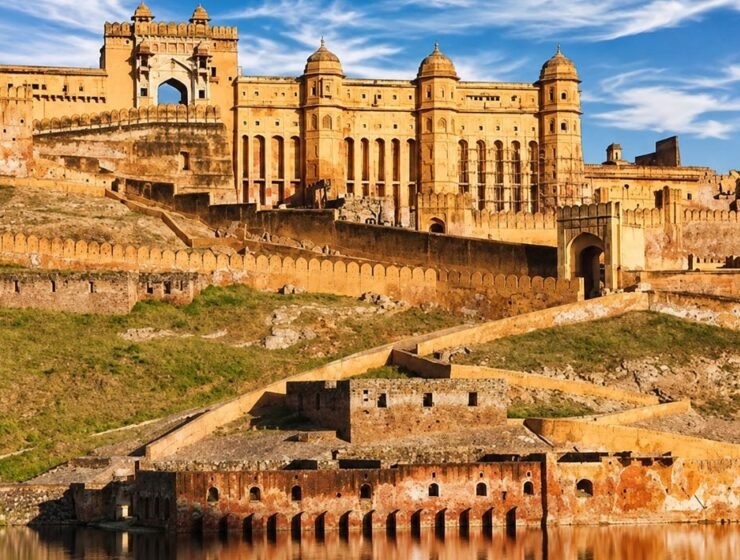
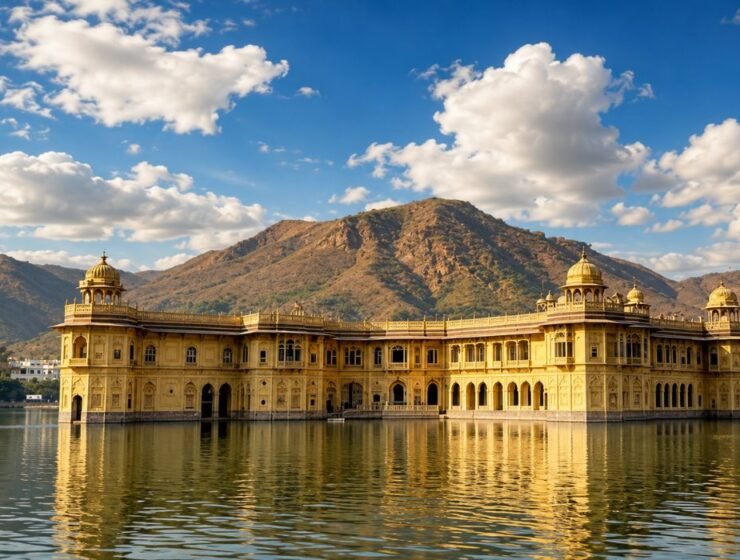
First-timers do best with fewer destinations and longer stays. Delhi, Agra and Jaipur form the Golden Triangle, a compact loop with excellent monuments and well-developed transport. A Golden Triangle tour is a sensible starting point for most travellers.
Delhi: Humayun’s Tomb, Qutub Minar, India Gate and the lanes of Old Delhi, with their markets and street life.
Humayun’s Tomb in Delhi on a first itinerary
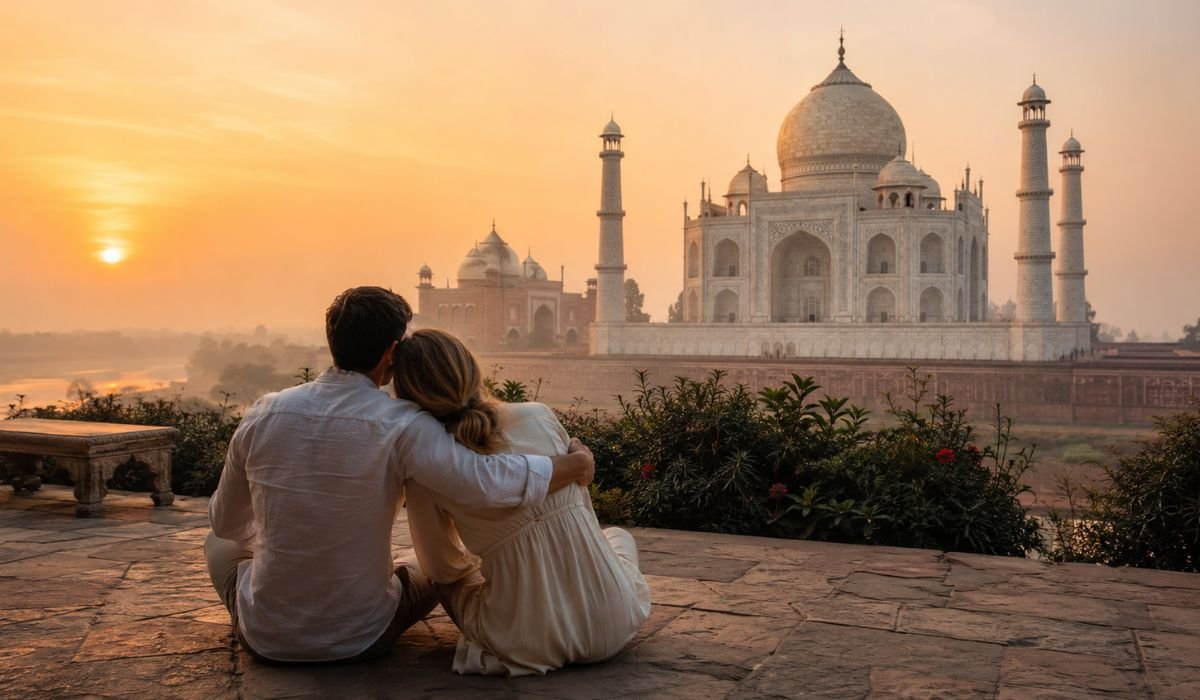
Agra: The Taj Mahal is best at sunrise, followed by Agra Fort and, in the late afternoon, Mehtab Bagh for river-side views. Check opening days before booking, as the Taj Mahal closes one day each week. Short on time? A Taj Mahal tour from Delhi can be done in a day, though it is long.
Jaipur: Amber Fort, Hawa Mahal, City Palace and bazaars for textiles and handicrafts.
Hawa Mahal pink sandstone facade in Jaipur, Rajasthan
Typical road distances are Delhi to Agra about 230 km (3.5 to 4 hours), Agra to Jaipur about 240 km (4.5 to 5.5 hours) and Jaipur to Delhi about 280 km (5 to 6 hours). Traffic can lengthen these.
| Day | Plan |
|---|---|
| 1 | Arrive Delhi; rest |
| 2 | Old and New Delhi sightseeing |
| 3 | Drive to Agra; Mehtab Bagh sunset |
| 4 | Taj Mahal sunrise, Agra Fort; drive to Jaipur |
| 5 | Amber Fort, City Palace, Hawa Mahal |
| 6 | Jaipur bazaars and crafts; free time |
| 7 | Return to Delhi |
| 8 | Depart or extend |
Have more time? Add Rajasthan tour packages for Udaipur or Jodhpur, or consider [South India tours](URL TO BE ADDED: South India page not found in site navigation) for temples, backwaters and a gentler climate. Resist squeezing in too many cities.
5. Know What to Pack for India
Light, breathable layers work best, plus modest cover-ups for temples.
- Loose cotton or linen clothing; shoulders and knees covered
- Comfortable walking shoes and easy slip-ons for temples
- Sunscreen, hat and sunglasses
- Insect repellent
- Personal medication with prescriptions
- Universal adapter (Australian plugs do not fit; India uses types C, D and M at 230V)
- Hand sanitiser, tissues and a power bank
- Passport, visa and insurance copies
Pack a light scarf and a warm layer for winter evenings.
6. Understand Indian Food and Drinking Water
Indian cuisine varies by region: creamy curries and breads in the north, coconut and rice dishes in the south. Vegetarian food is abundant and reliably good, so dietary needs are usually manageable. Tell restaurants about allergies clearly.
Practical precautions: choose busy, freshly cooked venues, avoid raw salads if unsure, and drink only sealed bottled or properly treated water. Avoid ice of unknown origin. Start with milder dishes and enjoy the food gradually; most travellers eat well with sensible care. Consult a travel doctor about vaccinations well before departure.
Freshly cooked Indian thali served at a busy local restaurant
7. Learn About Money and Payments in India
For a first time visiting India from Australia, remember that India uses the rupee (INR) and Australian dollars are not generally accepted for everyday purchases. Withdraw cash from bank ATMs, ideally during the day, and use international cards in hotels and larger restaurants. Notify your bank before travel.
UPI is widely used by locals, but foreign visitors may find access limited, so do not rely on it. Carry some small notes for tips, markets and tuk-tuks. Exchange currency at banks, airports or authorised dealers, not at street offers.
8. Choose Safe and Convenient Transport

- Airport transfers: pre-arranged pickups avoid arrival confusion.
- Private car with driver: door-to-door comfort and flexible stops; costs more.
- Indian Railways: scenic and affordable, but booking and stations can be complicated for newcomers.
- Domestic flights: useful for long distances to the south or far west.
- App-based taxis and local transport: handy in cities; quality varies.
For a first time visiting India from Australia, a private car and experienced driver between Delhi, Agra and Jaipur removes station navigation and negotiation, lets you stop at viewpoints, and suits families after a long flight. No transport is risk-free, and Smartraveller warns that transport and tour operators may not meet Australian safety standards, so use verified providers.
Private air-conditioned car with driver for Delhi Agra Jaipur sightseeing
9. Respect Indian Culture and Local Customs
- Cover shoulders and knees at temples and mosques, similar to dress expectations at some Australian places of worship.
- Remove shoes where required.
- Ask before photographing people and religious ceremonies.
- Greet with “Namaste” and a smile; use your right hand for eating and giving.
- Be modest with public displays of affection.
- Accept that queues and timing are flexible.
10. Stay Connected During Your Trip
Buy an Indian SIM or eSIM; SIM purchase requires ID and can take time at the airport. Save offline Google Maps and translation apps before you leave. Keep hotel addresses, your insurer’s number and emergency contacts accessible. India’s emergency number is 112, and India is 4.5 hours behind Sydney and Melbourne (5.5 during daylight saving).
11. Independent Travel or a Private Tour for First Time Visiting India from Australia?
| Factor | Independent | Private tour |
|---|---|---|
| Flexibility | Maximum | Customisable within the itinerary |
| Planning effort | High | Lower |
| Transport | Self-arranged | Included |
| Local help | Limited | Guide and driver |
| Time management | Risk of delays | Structured |
| Cost | Often lower | Often higher, but bundled |
Independent travel suits confident, flexible travellers with time. Private tours suit first-timers, families and short trips. Luxury India Taj Tours, based in Agra, offers private Golden Triangle packages with air-conditioned vehicles and English-speaking guides, though inclusions vary, so review each package page.
12. Common Mistakes When First Time Visiting India from Australia
- Too many destinations: limit yourself to two or three regions.
- Underestimating road times: add buffers.
- Late visa checks: apply early on the official site.
- No insurance: buy comprehensive cover before paying deposits.
- Untreated water: stick to sealed bottled water.
- Unverified transport: use reviewed, registered providers.
- Ignoring weather: match your dates to your region.
- Last-minute bookings: reserve peak-season hotels and monument-day plans early.
13. Frequently Asked Questions
Is India suitable for first-time visitors from Australia?
Yes, with preparation. A first time visiting India from Australia goes best on a manageable route like the Golden Triangle, with transport arranged in advance and sensible health and safety precautions. Check Smartraveller’s current advice before booking, and expect a lively, sensory-rich experience.
How many days are enough for a first trip to India?
Seven to ten days comfortably covers Delhi, Agra and Jaipur without rushing. Five days is possible but tight. Adding Rajasthan or South India calls for two weeks or more, particularly after a long flight from Australia.
What is the best month to visit India from Australia?
November to February is generally the most comfortable for North India, with pleasant days and cooler evenings. March can also work. Avoid peak summer heat from April to June, and plan carefully around the monsoon from roughly July to September.
Do Australian citizens need a visa to visit India?
Yes. Most Australians apply online for an e-Tourist Visa through the official Indian government portal. Rules, fees and timelines change, so check current requirements there and apply well ahead of departure rather than relying on third parties.
Is India safe for Australian tourists?
Millions of tourists visit safely, but risks exist. Smartraveller advises caution and warns against some regions. Use licensed transport, keep valuables secure, dress modestly and research your route. Always read the current official advice and carry appropriate travel insurance before departing.