Last Updated
Table of contents
- Jal Mahal Jaipur: The Complete 2026 Visitor Guide
- Jal Mahal Quick Reference
- The History of Jal Mahal: From Royal Hunting Lodge to Submerged Wonder
- Who Actually Owns Jal Mahal Today — And Why It’s Still Closed
- The Architecture: Rajput Design Meant to Float
- Man Sagar Lake: From Toxic Dump to Recognised Wetland
- Birdwatching at Man Sagar Lake
- Photography Guide: Best Times, Angles & Equipment
- The Evening Illumination at Jal Mahal
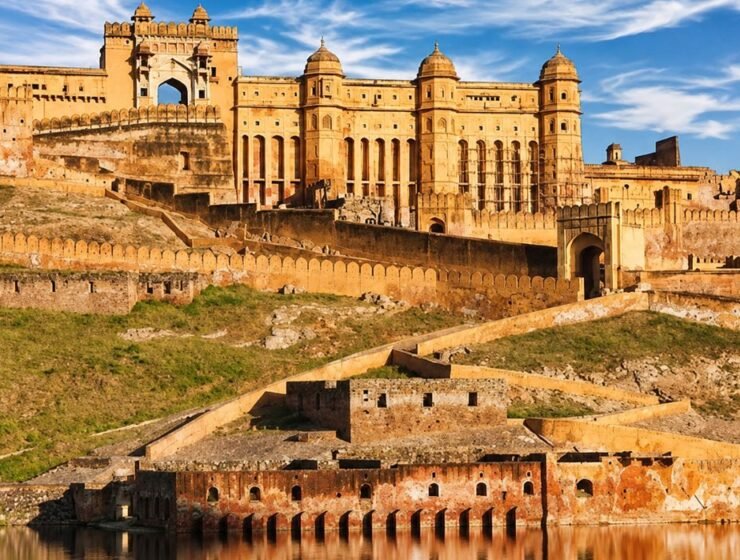
- What’s Nearby: The Amber Fort Road Circuit
- Practical Visitor Tips & Scam Warnings
- FAQs — Jal Mahal Jaipur Visit 2026 Guide
- Who owns Jal Mahal now, and will it ever open to visitors?
- Explore Jaipur in Complete Comfort
Jal Mahal Jaipur: The Complete 2026 Visitor Guide
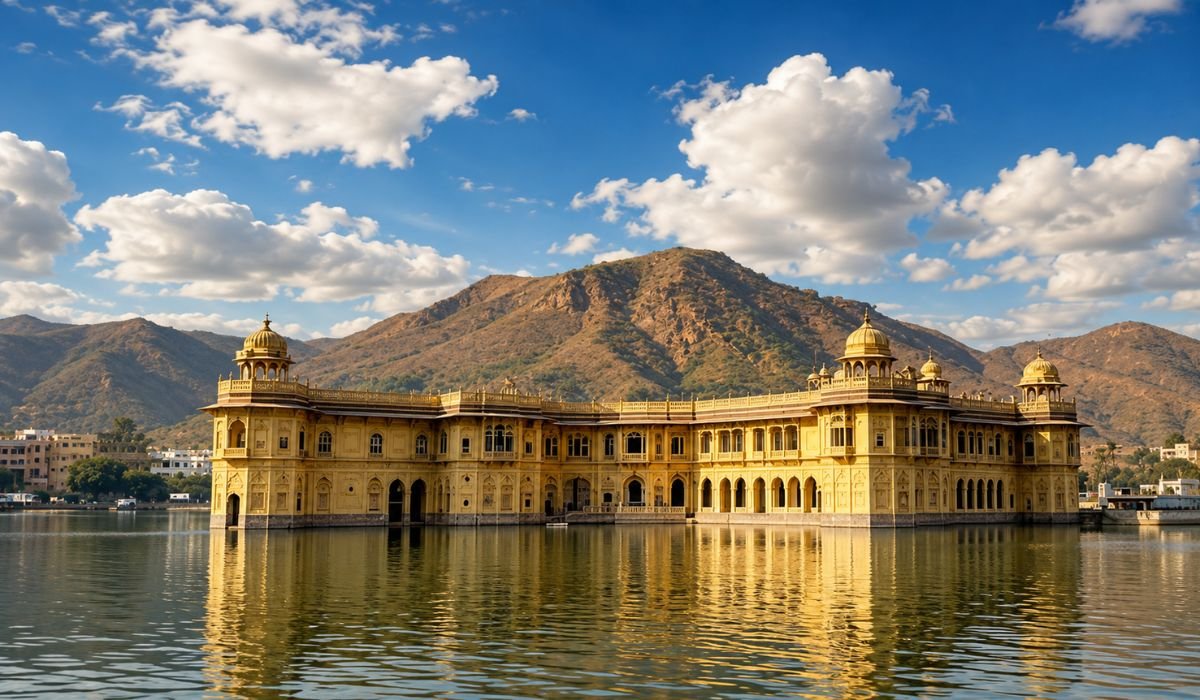
Jal Mahal is one of those rare sights that stops you mid-sentence. A five-story red sandstone palace rising from the still waters of Man Sagar Lake, framed by the rugged Aravalli Hills — it looks like something a painter invented, not something you can actually drive past on the road to Amber Fort.
But here is what most travel guides take three paragraphs to tell you, so let us say it upfront:
You cannot go inside Jal Mahal. The palace interior is closed to the public for conservation, and current ownership arrangements keep it that way for the foreseeable future. There is no entry fee because there is no entry. Your entire experience is from the lakeside promenade — and honestly, that is more than enough. The exterior view, especially at sunrise or sunset, is one of the most photogenic moments in all of Rajasthan. If you are planning to explore more of the state’s royal cities, forts, lakes and heritage destinations, you can also explore our Rajasthan tour packages for a wider journey through the region.
This guide covers everything you actually need to know: the real history behind those submerged floors, who actually owns Jal Mahal today and why it stays closed, how a polluted lake became a recognised birdwatching wetland, exactly when and where to get the best photographs, and how to weave Jal Mahal into a smart Jaipur sightseeing route with a private car.
Jal Mahal Quick Reference
| Detail | Information |
|---|---|
| Full Name | Jal Mahal (Water Palace) |
| Location | Amer Road, Man Sagar Lake, Jaipur |
| Entry Fee | Free (viewed from lakeside promenade only) |
| Can You Go Inside? | No — closed to the public; privately managed under a heritage restoration lease |
| Time Needed | 30 minutes to 1 hour |
| Best Time of Day | Sunrise (photography) or sunset (atmosphere & illumination) |
| Best Months | October–March (pleasant weather + migratory birds) |
| Nearest Major Sight | Amber Fort — 7 minutes by car along the same road |
Planning a Rajasthan Tour?
Discover Rajasthan’s royal cities, magnificent forts, vibrant culture, and unforgettable heritage experiences with a personalized tour.
The History of Jal Mahal: From Royal Hunting Lodge to Submerged Wonder
The story of Jal Mahal begins not with the palace itself but with the lake it sits in.
Man Sagar Lake is an artificial reservoir created around 1610 by Raja Man Singh I of Amer. He ordered a dam built across the Dravyavati River between the surrounding hills, creating a vast water body that would serve the city and the royal court.
The palace came later. While some accounts trace its foundations to 1699, Jal Mahal was significantly expanded and renovated in the 18th century by Maharaja Sawai Jai Singh II — the same visionary ruler who built Jaipur itself, the City Palace, and the Jantar Mantar observatory.
The original purpose of Jal Mahal was delightfully impractical by modern standards. It served as a pleasure retreat and royal duck-hunting lodge. The Maharaja and his court would arrive by boat, spend leisurely evenings on the rooftop terrace watching the sun set behind the Aravallis, and hunt waterfowl across the lake.
The palace was designed to work with the lake’s water levels — not against them. When the monsoon rains fill Man Sagar Lake, four of the palace’s five floors become submerged, leaving only the elegant top story and its rooftop pavilion visible above the waterline. During drier months, more of the structure emerges. This is not damage or flooding. It is exactly how the palace was engineered to function.
Who Actually Owns Jal Mahal Today — And Why It’s Still Closed
This is a detail most guides skip, and it explains the closure far better than a generic “for conservation” line.
Jal Mahal’s restoration wasn’t a straightforward government project — it was carried out under a public-private partnership, with Jal Mahal Resorts Pvt. Ltd. (JMRPL) taking on the multi-year rehabilitation of both the palace and Man Sagar Lake starting in 2005. Cultural innovation architect Rajeev Lunkad led the five-year restoration effort as its director, later documenting the project in a book on the palace’s revival.
That private lease is precisely why access has stayed restricted long after the restoration finished. The palace is closed to the general public, with entry strictly restricted, and it is currently treated as private property with ongoing legal issues around its future use. Proposals to eventually open parts of it as a museum, heritage hotel, or cultural centre have circulated for years, but nothing has moved past the discussion stage. As of 2026, the interior remains closed to the general public for conservation reasons, with the visitor experience limited to viewing and photographing the exterior from the lake’s perimeter.
Practical takeaway: don’t expect this to change on your travel dates. If a street tout offers you “special access” or interior tickets, that’s a scam — walk away.
The Architecture: Rajput Design Meant to Float
Jal Mahal is built primarily from red sandstone and displays a refined blend of Rajput and Mughal architectural styles. Restoration accounts describe the structure as a 55m x 55m pavilion with a garden on its terrace — a scale that’s easy to underestimate from the shore.
The structure features:
- Semi-octagonal towers at each of the four corners, topped with elegant domed cupolas (chhatris)
- A Bengali-style square pavilion on the rooftop — the only floor consistently visible above water
- Arched corridors and jharokha windows along the visible upper level, originally designed to catch cross-breezes from the lake surface
- A formal Char Bagh garden on the rooftop terrace, recreated during restoration with fragrant plants and walkways
The lower four floors have thick waterproofed walls and sealed chambers that have survived centuries of seasonal flooding — a remarkable feat of pre-modern engineering.
Man Sagar Lake: From Toxic Dump to Recognised Wetland
By the late 20th century, Man Sagar Lake had become one of Jaipur’s worst environmental disasters. Untreated sewage from the growing city was being dumped directly into the lake, industrial waste accumulated, the water turned toxic, and the ecosystem collapsed. The palace sat abandoned in a polluted swamp.
Starting in 2005, the restoration project tackled the lake alongside the palace:
- Millions of tonnes of toxic silt were dredged and removed from the lake bed
- The lake was deepened and its banks reinforced
- An eco-friendly water treatment system was installed to filter incoming water
- Native aquatic plants were reintroduced to naturally purify the ecosystem
- The palace itself was restored using traditional materials and techniques
The results were real, though the exact bird count depends on which survey you read. Early post-restoration counts logged around 170 species; more recent surveys and local tourism sources put the figure between roughly 190 and over 200. Whichever number you use, the shift from a dead lakebed to a functioning wetland ecosystem is the story — and it’s genuinely one of the better urban ecological restorations in North India.
Birdwatching at Man Sagar Lake
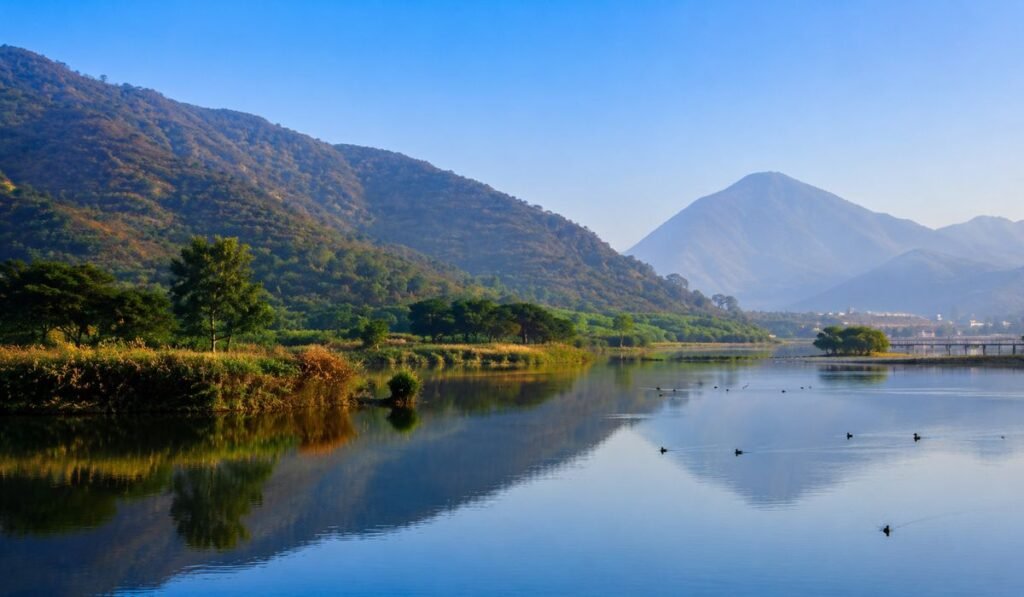
If you visit between November and February, the lake becomes a winter haven for migratory birds. Species regularly spotted include:
- Greater Flamingos — yes, flamingos in the middle of Jaipur
- Grey Herons and Painted Storks
- Pintails, Pochards, and Northern Shovelers (migratory ducks)
- Sandpipers and Wagtails along the shoreline
- Cormorants diving for fish in the restored waters
Birdwatching Tip: Early morning (6:30–8:00 AM) is the best window. Bring binoculars or a zoom lens. The northern bank of the lake near the dam tends to have the highest concentration of wading birds.
Photography Guide: Best Times, Angles & Equipment
Jal Mahal is one of the most photographed landmarks in India. Here is how to get shots that rise above the standard tourist snapshot.
Sunrise (6:30–8:00 AM): Soft golden light illuminates the palace’s eastern facade, the lake surface is glass-still with mirror reflections, and there are almost no crowds. Best for clean architectural photography and birdwatching.
Sunset (5:30–7:00 PM): Warm amber light behind the Aravalli silhouette, more atmospheric and dramatic, but busier with local families, street food vendors, and evening walkers. Best for mood photography and the evening illumination that follows.
Best Viewing Angles
- The Lakeside Promenade (South Bank): The classic front-facing view. Walk along the paved pathway for various perspectives.
- Amer Road Elevated View: From slightly higher up on the road heading toward Amber Fort, you get an angled view that includes the Aravalli backdrop.
- The Dam Wall (East Side): Less crowded. Offers a wider panoramic angle showing the full expanse of Man Sagar Lake with the palace in context.
Equipment Tips
- Zoom lens (70–200mm or equivalent): Essential for capturing architectural details from shore — the palace is roughly 150 metres from the nearest viewing point.
- Polarising filter: Cuts glare from the lake surface and deepens the sky contrast.
- Smartphone photographers: Use 2x or 3x optical zoom. Avoid digital zoom — it degrades quality. Early morning calm water gives the cleanest reflections.
The Evening Illumination at Jal Mahal
After sunset, Jal Mahal transforms again. The palace is illuminated with warm golden lights that reflect off the dark, calm lake surface, creating a doubled image — the palace above and its perfect mirror below.
The lakeside promenade comes alive in the evening with local families, couples, and street food vendors selling chai, roasted corn, and kulfi. It’s a relaxed, pleasant atmosphere and a lovely way to end a day of fort exploration.
Tip: The illumination is best viewed from the south bank promenade. Allow 20–30 minutes after sunset for the lights to reach full effect against the darkening sky.
What’s Nearby: The Amber Fort Road Circuit
Jal Mahal sits on Amer Road — the main highway connecting Jaipur city centre to the Amber Fort complex. This makes it a natural stop on the most popular sightseeing route in the city.
Smart routing with a private car:
JAIPUR CITY CENTRE
       │
       ▼ (15 min drive)
[ JAL MAHAL — Photo Stop, 30–45 min ]
       │
       ▼ (7 min drive)
[ AMBER FORT — Full Tour, 2–2.5 hours ]
       │
       ▼ (5 min drive, same ridge)
[ JAIGARH FORT — Cannon & Armory, 45 min ]
       │
       ▼ (15 min drive via hill road)
[ NAHARGARH FORT — Sunset Views, 1–1.5 hours ]
This circuit covers four major Jaipur sights in a single half-day loop. Starting with a sunrise photo stop at Jal Mahal, moving up to Amber Fort for the morning, connecting to Jaigarh Fort over lunch, and finishing at Nahargarh Fort for sunset creates the perfect day — and it only works smoothly with a dedicated private car and driver who knows the hill roads and parking logistics.
Other Nearby Stops
- Kanak Vrindavan Garden: A small, peaceful Mughal-style garden just 2 minutes from Jal Mahal, rarely visited by tourists.
- Sisodia Rani Garden: A terraced garden built for a Rajput queen, about 10 minutes further along the road.
Practical Visitor Tips & Scam Warnings
What to expect:
- The lakeside promenade is free and open throughout the day
- There are no official guides or audio tours (there is nothing to tour inside)
- Basic public washrooms are available near the parking area
- Small shops and vendors sell water, snacks, and souvenirs along the promenade
Vendor Warning: Handicraft and souvenir sellers near the promenade frequently quote prices 3–5x higher than the same items cost in Johari Bazaar or Bapu Bazaar downtown. If you want to shop for Jaipur crafts, save your money for the city bazaars instead.
Pickpocket Awareness: Like most popular tourist photo spots, the Jal Mahal promenade can get crowded during peak hours (late afternoon). Keep valuables secure — or better yet, leave bags locked in your private car while you walk the lakeside.
FAQs — Jal Mahal Jaipur Visit 2026 Guide
Can you go inside Jal Mahal Jaipur?
No. The palace interior is closed to the public and privately managed under a long-term restoration lease. The entire visitor experience is from the lakeside promenade, which is free.
Is Jal Mahal worth visiting?
Yes — but set the right expectations. It’s a 30–60 minute photo stop, not a multi-hour attraction. The palace view is genuinely stunning, especially at sunrise or sunset. Combine it with the Amber Fort drive and it adds almost no extra time to your day.
What is the entry fee for Jal Mahal?
There is no entry fee. Viewing is free from the public lakeside promenade.
Why is Jal Mahal underwater?
The palace was deliberately designed this way. When Man Sagar Lake fills during monsoon season, four of its five stories become submerged, leaving only the rooftop floor visible. This is original engineering, not damage.
Who owns Jal Mahal now, and will it ever open to visitors?
The palace and lake were restored under a public-private partnership led by Jal Mahal Resorts Pvt. Ltd. starting in 2005. Plans for a museum or heritage site inside have been discussed for years but remain unresolved, so there’s no confirmed opening date.
What is the best time to visit Jal Mahal Jaipur?
For photography, visit at sunrise (fewest crowds, mirror-still lake reflections). For atmosphere and illumination, visit at sunset and stay for the evening lights. and for birdwatching, visit between November and February when migratory species arrive.
Explore Jaipur in Complete Comfort
Jal Mahal is just one stop on the magnificent Amber Fort road circuit. With a private car from Luxury India Taj Tours, you cover Jal Mahal, Amber Fort, Jaigarh Fort, and Nahargarh Fort sunset in a single seamless half-day — no parking stress, no hill-road navigation, no fare haggling.
Last researched and verified: August 2026.