
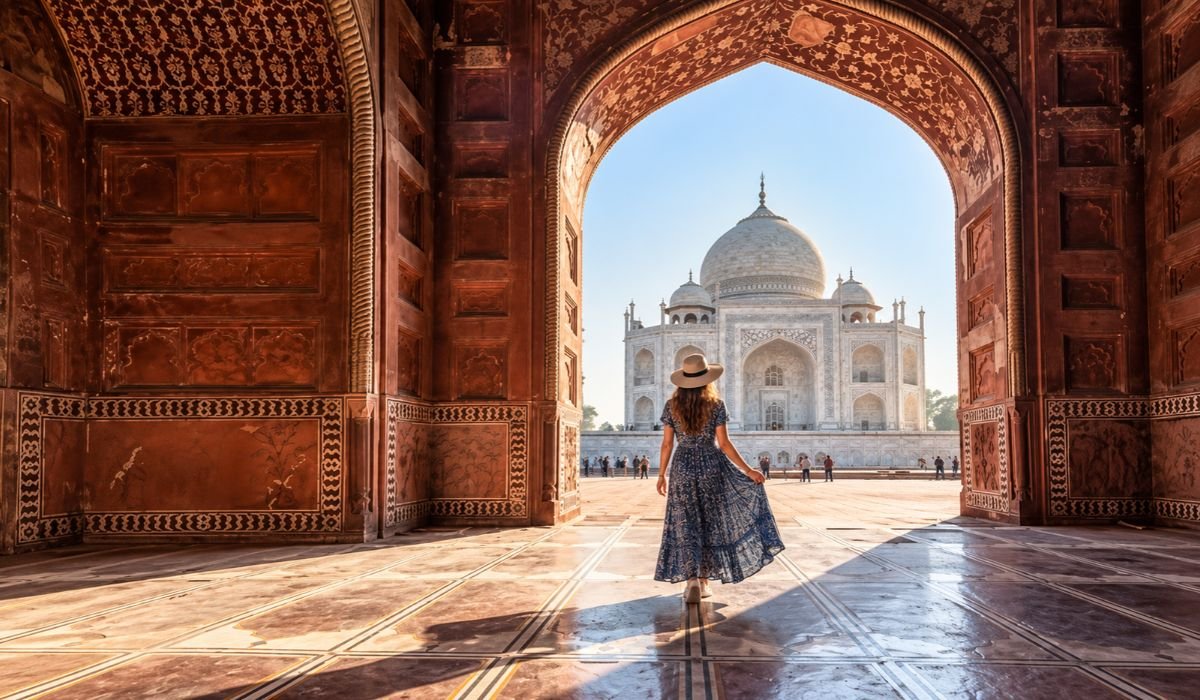
The best thing to wear at the Taj Mahal is lightweight, comfortable clothing suited to Agra’s weather — plus shoes you can slip off easily. There’s no strict official dress code, but the Taj Mahal is a historic mausoleum and cultural landmark, so modest, practical clothing works best. Whether you’re visiting during Agra’s scorching summer heat or its cool winter mornings, what you wear affects your comfort, your photographs, and how smoothly you move through security. If you’re planning your visit, explore this Luxury Taj Mahal tours to make your Agra sightseeing experience easier to organise. Here’s everything you need to know to plan the right outfit.
Is There a Dress Code at the Taj Mahal?
No, the Archaeological Survey of India (ASI) does not publish a mandatory clothing dress code for the Taj Mahal. The ASI’s official visitor rules focus on prohibited items — things like tripods, food, drones, large bags, and electronic chargers — rather than a written clothing policy.
That said, the Taj Mahal is an active Islamic mausoleum and the burial site of Mumtaz Mahal. Treating it with the same respect you’d show when visiting a cathedral, mosque, or temple is both appropriate and appreciated. In practice, this means:
- Shoulders and knees covered is a smart default. You won’t find this printed on your ticket, but security guards occasionally exercise discretion with clothing they consider overly revealing.
- No head covering required for the general complex. If you plan to step into the working mosque on the western side of the complex, carrying a lightweight scarf is helpful.
- Standard casual clothing is fine. Jeans, T-shirts, cotton dresses, linen trousers — all perfectly acceptable.
Bottom line: You won’t be turned away for wearing regular travel clothes. But modest, comfortable clothing is the easiest choice for a smooth visit. If you’re traveling from Delhi, consider a 1-day Taj Mahal tour by superfast train for a convenient same-day trip to experience this iconic monument.
What to Wear at the Taj Mahal in Different Seasons
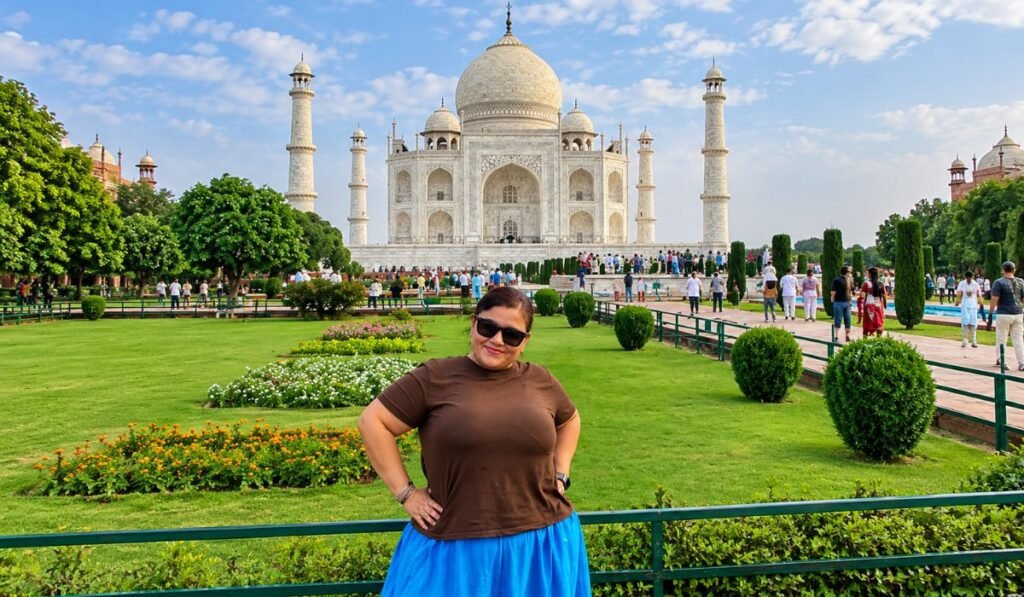
Agra’s climate swings dramatically across the year. The right outfit depends heavily on when you visit.
What to Wear in Summer (April–June)
Agra’s summer is genuinely extreme. Temperatures routinely hit 40–45°C (104–113°F), and the Taj Mahal’s white Makrana marble reflects sunlight and radiant heat intensely — the ground-level temperature feels even hotter than the air.
What works:
- Loose, lightweight cotton or linen in light colors (white, beige, soft pastels) to reflect sunlight
- Long, breathable trousers or a maxi skirt — these actually protect your legs from the marble’s reflected heat better than shorts
- A wide-brimmed hat or scarf for sun protection
- Sunglasses — the glare off the marble is intense
- Sunscreen on all exposed skin
And what to avoid: Tight synthetics, heavy denim, and dark colors that absorb heat.
What to Wear in Winter (November–February)
Winter is Agra’s peak tourist season, and for good reason — daytime highs hover around 22–28°C (72–82°F). But early mornings, especially for a sunrise visit in December or January, can drop below 10°C (50°F) with dense fog.
What works:
- Layers you can shed. A warm jacket, cardigan, or shawl over a T-shirt or blouse lets you adjust as the morning warms up.
- Choose layers that pack small — large bags are prohibited inside the complex, so whatever you take off needs to fit in a small backpack or be tied around your waist.
- Closed-toe shoes for chilly early mornings
By late morning, you’ll likely be comfortable in just a shirt or blouse.
What to Wear During Monsoon (July–September)
Agra’s monsoon brings humidity and periodic rain showers, though it’s far less intense than coastal India. Temperatures ease to around 33–35°C (91–95°F), but it feels muggy.
What works:
- Quick-drying fabrics — cotton-poly blends or moisture-wicking travel clothes
- Footwear that handles wet ground — waterproof sandals or shoes with grip
- A compact rain jacket or small umbrella
- Avoid long, flowing skirts or wide-leg trousers that drag through puddles
Best Taj Mahal Outfit Ideas for Women
There’s no single “right” outfit — just combinations that balance comfort, practicality, and personal style.
- Maxi dresses in cotton or linen are a popular choice. They’re comfortable in the heat, photograph beautifully, and provide modest coverage without effort.
- Loose trousers or palazzos paired with a breathable blouse or tunic. A kurta (Indian-style tunic) with cotton trousers is both comfortable and culturally fitting.
- Midi or maxi skirts with a simple top. Avoid anything too tight or restrictive — you’ll be walking 2–3 km across gardens and courtyards.
- A lightweight scarf or pashmina is genuinely useful: it works as sun protection, a modesty cover for the mosque, and a photo prop.
Fabric matters more than style. Natural, breathable fabrics — cotton, linen, light chambray — beat synthetics in Agra’s climate every time. Save the polyester for a different trip.
Best Taj Mahal Outfit Ideas for Men
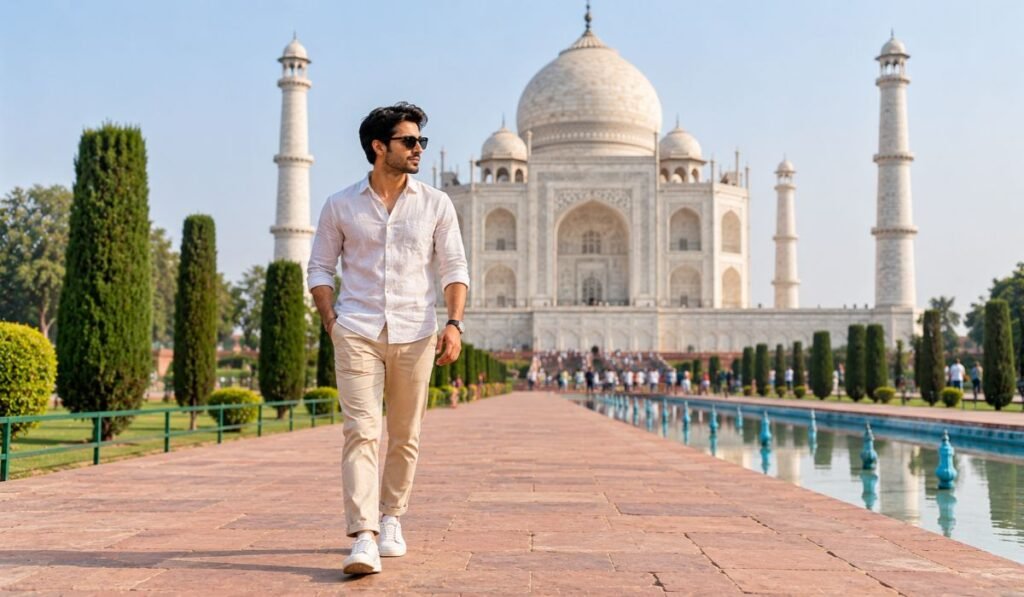
Men’s advice often gets overlooked in Taj Mahal guides, but it matters just as much.
- Linen or cotton button-down shirts (short or long sleeve) are the most versatile choice. They look sharp in photos and breathe well in the heat.
- Chinos or lightweight cotton trousers are ideal. Jeans are fine in winter but can be uncomfortably hot from March onward.
- Well-fitted T-shirts work perfectly for a casual look.
- Avoid sleeveless tank tops or very short athletic shorts. You won’t necessarily be turned away, but you’ll blend in more comfortably with at least short sleeves and knee-length shorts or trousers.
Pocket tip: Since large bags and backpacks are prohibited, choose trousers or shorts with deep, secure pockets (ideally zippered) to carry your phone, wallet, and passport. Cargo shorts or travel pants with hidden pockets work well.
What Shoes Should You Wear at the Taj Mahal?
Footwear deserves its own plan. Here’s why:
The marble platform rule: When you step onto the raised white marble platform surrounding the main mausoleum, you must either remove your shoes or wear shoe covers. Disposable shoe covers are provided free with foreign tourist tickets — you’ll receive them near the platform. Don’t buy overpriced shoe covers from vendors outside the gates; the ones included with your ticket are all you need.
What to wear on your feet:
- Slip-on shoes, loafers, or supportive sandals — anything easy to take on and off quickly. You’ll save significant time at the platform.
- Comfortable walking shoes or sneakers if you prefer closed-toe — just choose ones without complicated laces.
- Bring a pair of thick socks in your pocket or bag. In summer, the marble gets scorching hot underfoot. In winter mornings, it’s freezing cold. Socks let you walk comfortably whether you use shoe covers or go barefoot.
Avoid: Brand-new shoes that haven’t been broken in, high heels, and heavy boots. The complex covers a lot of ground — around 2–3 km of walking across pathways, gardens, and courtyards.
Best Colors to Wear for Taj Mahal Photography
The Taj Mahal is a massive canvas of white marble. Your outfit color choices can make or break your photographs — but these are aesthetic suggestions, not rules.
Colors that pop against white marble:
- Rich jewel tones — emerald green, royal blue, deep red, and mustard yellow create striking contrast
- Soft pastels — blush pink, lavender, and powder blue look especially beautiful during the golden light of sunrise or late afternoon
- Earth tones — rust, terracotta, and warm cream tones work well against the red sandstone areas flanking the mausoleum
Colors to reconsider:
- All white or ivory — you risk blending into the monument entirely. White also shows dust and dirt quickly in Agra.
- Neon or very bright colors — these can create harsh color casts on your skin under strong Indian sunlight
Coordinating as a couple or family? Complementary tones work better than matching. Try pairing a deep blue with a soft coral, or an emerald green with cream. The contrast between your outfits adds visual interest to the frame. For more inspiration on choosing outfits, poses, and the best photo spots, explore our Taj Mahal photography guide.
What Should American Tourists Pack for Agra?
If you’re flying from the US, here’s a practical packing checklist for your Taj Mahal day:
- 2–3 lightweight cotton or linen outfits suited to the season
- Comfortable slip-on walking shoes that you’ve broken in before the trip
- A pair of thick socks for comfort when walking on the marble platform
- Sunscreen, sunglasses, and a hat for sun protection throughout the year
- A light jacket or shawl for winter mornings or air-conditioned transport
- A compact rain jacket if visiting during the monsoon season (July–September)
- A small crossbody bag or fanny pack for carrying essentials, subject to current security restrictions
- Your passport and the required ticket or identification documents for your entry category
- A portable phone charger to keep your phone charged; check the latest official rules before bringing a power bank into the complex
Pro tip: Pack one outfit specifically for your Taj Mahal morning visit, choosing something comfortable that also photographs well. You can dress more casually for other Agra sightseeing activities. For a more comprehensive checklist covering clothing, travel documents, accessories, and other essentials, see our complete India packing list.
Essential Tips for First-Time Visitors
- Check the forecast before packing. Agra’s weather can vary significantly even within a season. A quick check the week before your trip helps you fine-tune layers and sun protection.
- Review the current visitor guidelines on the official Taj Mahal website. Rules about prohibited items occasionally change.
- Arrive early. Sunrise visits mean cooler temperatures, smaller crowds, and the best photography light. The Taj Mahal opens 30 minutes before sunrise.
- Travel light through security. Entry involves airport-style screening. The fewer items you carry, the faster you get through.
- The Taj Mahal is closed on Fridays. Plan your visit for any other day of the week.
- Don’t forget those socks. This is the single most underrated Taj Mahal packing tip. Your feet will thank you on the marble platform.
Frequently Asked Questions
Can you wear shorts at the Taj Mahal?
Yes, you can wear shorts. There is no official rule banning them. However, knee-length or longer shorts are more comfortable and draw less attention. In summer, longer loose-fitting clothes also protect your legs from the marble’s reflected heat.
Can you wear jeans at the Taj Mahal?
Absolutely. Jeans are fine for a winter visit when temperatures are mild. From April through September, though, jeans trap heat and can make Agra’s extreme temperatures much harder to handle. Lightweight cotton or linen trousers are a better choice in warm months.
Do you have to take your shoes off at the Taj Mahal?
You must remove your shoes or wear shoe covers on the raised white marble platform around the main mausoleum. Free disposable shoe covers are included with foreign tourist tickets. You keep your shoes on everywhere else in the complex — the gardens, walkways, and courtyards.
Are shoe covers free at the Taj Mahal?
Shoe-cover arrangements depend on the applicable ticket category and current visitor provisions. Check the official Taj Mahal website or the instructions provided with your ticket before visiting.
What’s the single best fabric for visiting the Taj Mahal?
Lightweight, breathable cotton is the most versatile choice across all seasons. Linen is equally good but wrinkles more easily. Both keep you cool in the heat and layer well in winter.


