
Standing before the Taj Mahal for the first time is a moment most travelers only get to experience once — which is exactly why choosing between a sunrise or sunset visit matters so much. The debate over sunrise vs sunset Taj Mahal viewing comes down to light, crowds, temperature, and the kind of memory you want to walk away with. For travelers planning a private, unhurried visit, booking a Luxury Taj Mahal Tour built around the ideal time of day is the single best decision you can make before arriving in Agra. This guide breaks down both experiences in detail, so you can decide which one fits your trip — and the best time to visit the Taj Mahal for your travel style.
Why Choosing the Right Time to Visit the Taj Mahal Matters
The Taj Mahal changes character throughout the day. Marble that looks pale pink at sunrise turns brilliant white by midday and glows amber-gold by sunset. Beyond aesthetics, timing affects three practical things: crowd density, heat exposure, and photography quality.
Agra’s climate is intense for much of the year, and midday visits between 11 AM and 3 PM often mean harsh light, packed walkways, and uncomfortable heat, especially from April through June. Early morning and late afternoon slots avoid this entirely. For anyone comparing Taj Mahal timing options, the choice really narrows to two serious contenders: sunrise and sunset.
Taj Mahal Opening Hours and Entry Timings
The Taj Mahal opens Time is 30 minutes before sunrise and closes 30 minutes before sunset, which means exact timings shift slightly month to month. It is closed on Fridays for prayers at the adjoining mosque, so plan around this if you’re building a multi-day Agra itinerary.
There are three visitor gates:
- East Gate — generally less crowded, preferred for photography and quicker entry
- West Gate — closer to parking and typically busier
- South Gate — closest to Taj Ganj market, convenient for those staying nearby
For either sunrise or sunset visits, arrive at least 20–30 minutes before the gates open to secure a spot near the front of the queue. E-tickets booked in advance save significant time, and travelers on a guided tour typically skip much of this hassle entirely since entry logistics are handled in advance.
For more information you can explore are Taj Mahal Opening Hours Guide
Sunrise Taj Mahal Experience
Sunrise is the classic choice, and for good reason. The monument opens to a soft, cool morning light that brings out delicate pink and gold tones on the marble facade. Crowds are noticeably thinner in the first hour, giving photographers a rare window of near-empty courtyards.
Temperatures are at their lowest point of the day, which matters enormously in Agra’s peak summer months. The quiet atmosphere also lends itself to a more reflective, personal experience — many travelers describe the first glimpse of the dome emerging through morning mist as the highlight of their entire India trip.
For luxury travelers, a private chauffeur arrival before dawn removes the stress of navigating unfamiliar streets in the dark, and a private guide can time your entry precisely to the sunrise moment rather than fighting through queues. October through March offers the clearest skies and best sunrise visibility, though winter mornings can bring fog that, while atmospheric, occasionally delays the ideal photo window.
If you’re building a full day around this, a same day Taj Mahal tour by car pairs naturally with an early start, since it’s structured around a dawn departure and return the same evening. Travelers coming from Delhi who prefer rail can also consider the Taj Mahal tour by superfast train, which times arrival in Agra for a mid-morning Taj visit rather than sunrise itself — worth noting if sunrise specifically is your priority.
Sunset Taj Mahal Experience
Sunset offers a completely different mood. As the afternoon light softens, the white marble shifts into warm gold and rose tones, particularly dramatic in the final 20 minutes before the gates close. This is often considered the more romantic option, and it’s a favorite among photographers chasing that golden-hour glow.
Crowds build up earlier in the afternoon but tend to thin again in the last hour, since many day-trippers have already left by then. Temperatures are more comfortable than midday but still warmer than a sunrise visit, which matters for travelers visiting in peak summer.
For couples and travelers wanting a slower, immersive experience after a full day exploring Agra Fort or Fatehpur Sikri, sunset naturally rounds out the day. If you’re staying overnight in Agra rather than doing a rushed same-day trip, an overnight Taj Mahal tour with a private cab and hotel is built precisely around this pacing — sunset at the Taj, a comfortable overnight stay, and a relaxed departure the next morning instead of a same-day rush.
Sunrise vs Sunset Taj Mahal: Detailed Comparison
| Factor | Sunrise | Sunset |
|---|---|---|
| Photography | Soft, even light; fewer people in frame | Warmer golden tones; more dramatic sky |
| Crowds | Lightest of the day | Moderate, thins near closing |
| Waiting time | Longer queue before opening | Shorter, more flexible |
| Romance | Quiet, intimate | Traditionally more romantic |
| Comfort | Coolest temperatures | Warm but manageable |
| Best for kids | Calmer, less overwhelming | More energetic atmosphere |
| Senior travelers | Easier pacing, cooler | Comfortable but requires more standing |
| Summer visits | Strongly preferred | Can feel humid and warm |
| Winter visits | Foggy but atmospheric | Crisp, clear skies |
| Monsoon visits | Fresh air, occasional rain | Dramatic cloud formations |
Which Experience Is Better for Different Travelers?
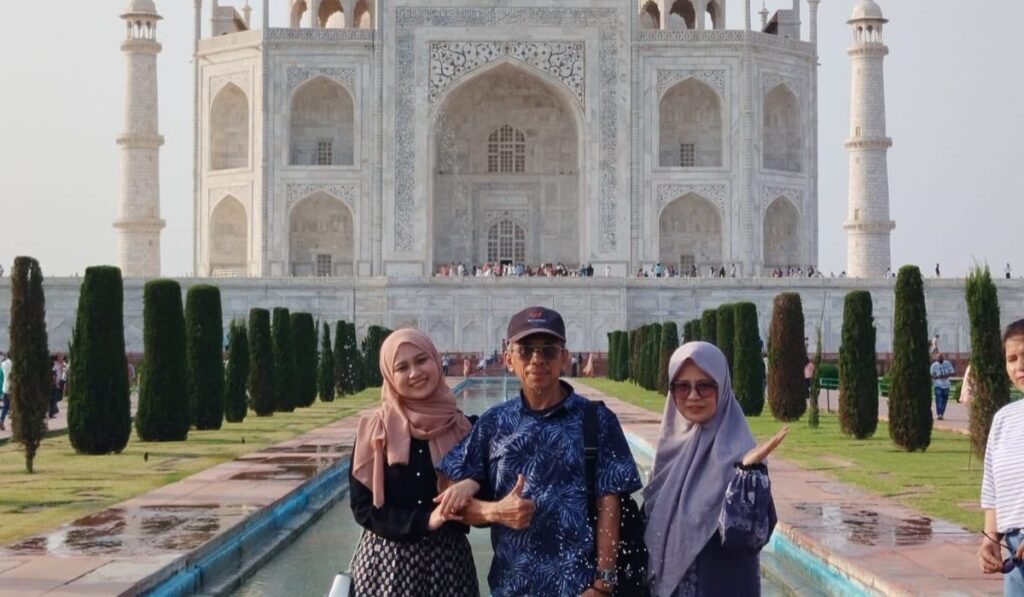
Couples — Sunset edges ahead for its golden light and romantic atmosphere, especially for anniversary or honeymoon trips.
Families with children — Sunrise works better; cooler temperatures and lighter crowds mean less fatigue for kids.
Solo travelers — Either works well, though sunrise offers more solitude for reflection and photography.
Senior travelers — Sunrise is gentler on the body due to lower heat, though sunset requires less pre-dawn logistics.
Luxury travelers — Both experiences are elevated significantly with a private chauffeur and guide; sunset pairs beautifully with an overnight stay, while sunrise suits a same-day itinerary.
First-time visitors — Sunrise is the traditional recommendation, since it delivers the iconic “misty dome” image most people associate with the Taj Mahal.
Photographers — Sunrise for clarity and symmetry shots, sunset for warm-toned, dramatic compositions.
Best Season for Sunrise and Sunset Visits
Winter (November–February): Clear skies favor sunset visibility, though sunrise can bring atmospheric fog. Comfortable temperatures either way.
Summer (April–June): Sunrise is strongly recommended to avoid extreme heat; sunset is still warm but more bearable than midday.
Monsoon (July–September): Both timings can bring rain, but skies often clear briefly around sunset, creating striking cloud backdrops. Sunrise visits tend to be cooler and fresher after overnight rain.
Suggested Luxury Itineraries
- Luxury Same Day Itinerary — Pre-dawn departure from Delhi, sunrise Taj Mahal visit, Agra Fort in late morning, return same evening. Best paired with the same day Taj Mahal tour by car.
- Luxury Overnight Itinerary — Afternoon arrival in Agra, Taj Mahal and Agra Fort half day tour, sunset Taj visit, overnight stay, and a relaxed morning departure — built around the overnight Taj Mahal tour.
- Luxury Golden Triangle Itinerary — Delhi, Agra, and Jaipur combined, with Agra timed around either sunrise or sunset depending on your onward travel schedule.
Best Luxury Hotels Near the Taj Mahal
For travelers doing an overnight stay, choosing a hotel with a Taj-facing view or a rooftop terrace adds significantly to the sunset experience. Several premium properties near the East Gate offer views of the monument directly from guest rooms — ideal for capturing the sunset glow without joining the closing-time crowds. (See our dedicated Best Luxury Hotels Near Taj Mahal guide for specific recommendations.)
Expert Travel Tips
- Choose the East Gate for faster entry and better photo angles at both sunrise and sunset.
- Wear breathable, modest clothing — shoulders and knees covered is respectful and practical.
- Arrive 20–30 minutes early regardless of which time slot you choose.
- Security lines move faster with minimal bags; avoid carrying food, tripods, or power banks.
- A local guide can position you for the best photo spots before crowds gather.
- Check seasonal sunrise/sunset times in advance, as they shift by up to an hour across the year.
- Book e-tickets ahead of time to skip the on-site ticket counter queue.
FAQs – Sunrise vs Sunset Taj Mahal
Is sunrise or sunset better at the Taj Mahal?
Sunrise offers cooler weather and fewer crowds, while sunset offers warmer light and a more romantic mood. Neither is objectively better — it depends on your travel style.
What time does the Taj Mahal open?
It opens 30 minutes before sunrise, with exact times varying by season.
Is the Taj Mahal closed on any day?
Yes, it is closed every Friday.
Which gate is best for the Taj Mahal?
The East Gate is generally recommended for quicker entry and better photography light.
How early should I arrive for sunrise?
At least 20–30 minutes before opening to secure a good position.
Is sunset crowded at the Taj Mahal?
It can be busy in the afternoon but often thins out in the final 30–45 minutes before closing.
Can I visit both sunrise and sunset in one trip?
Yes, this typically requires an overnight stay in Agra rather than a same-day visit.
What’s the best month to see the Taj Mahal?
October to March offers the most comfortable temperatures for either sunrise or sunset visits.
Do I need a guide for sunrise or sunset visits?
It’s not mandatory, but a private guide significantly improves timing, photo spots, and historical context.
Is photography allowed inside the main mausoleum?
Photography is restricted inside the mausoleum itself but permitted throughout the gardens and exterior.
Are there budget options if I can’t afford a full luxury tour?
Yes, more affordable structured options exist, such as Taj Mahal budget tours, for travelers wanting a guided experience at a lower cost.
What should I wear to visit the Taj Mahal?
Light, breathable, modest clothing that covers shoulders and knees is recommended.
Conclusion – Sunrise vs Sunset Taj Mahal
Both sunrise and sunset offer genuinely different ways to experience the Taj Mahal — one quiet and soft-lit, the other warm and dramatic. If you’re prioritizing fewer crowds and cooler weather, sunrise wins. If romance and golden-hour photography matter more, sunset is hard to beat. For travelers who want to avoid choosing at all, an overnight stay lets you experience both.
Whichever you choose, the experience is elevated considerably with private, well-timed transport and expert guidance. A Luxury Taj Mahal Tour is built to handle exactly this kind of timing precision, and for travelers extending their trip, a Luxury Golden Triangle Tour combines Agra with Delhi and Jaipur for a complete luxury India experience.
You May Also Like
Related Blogs